Menopause
Perimenopause Nutrition: Evidence vs Supplement Hype
The short answer
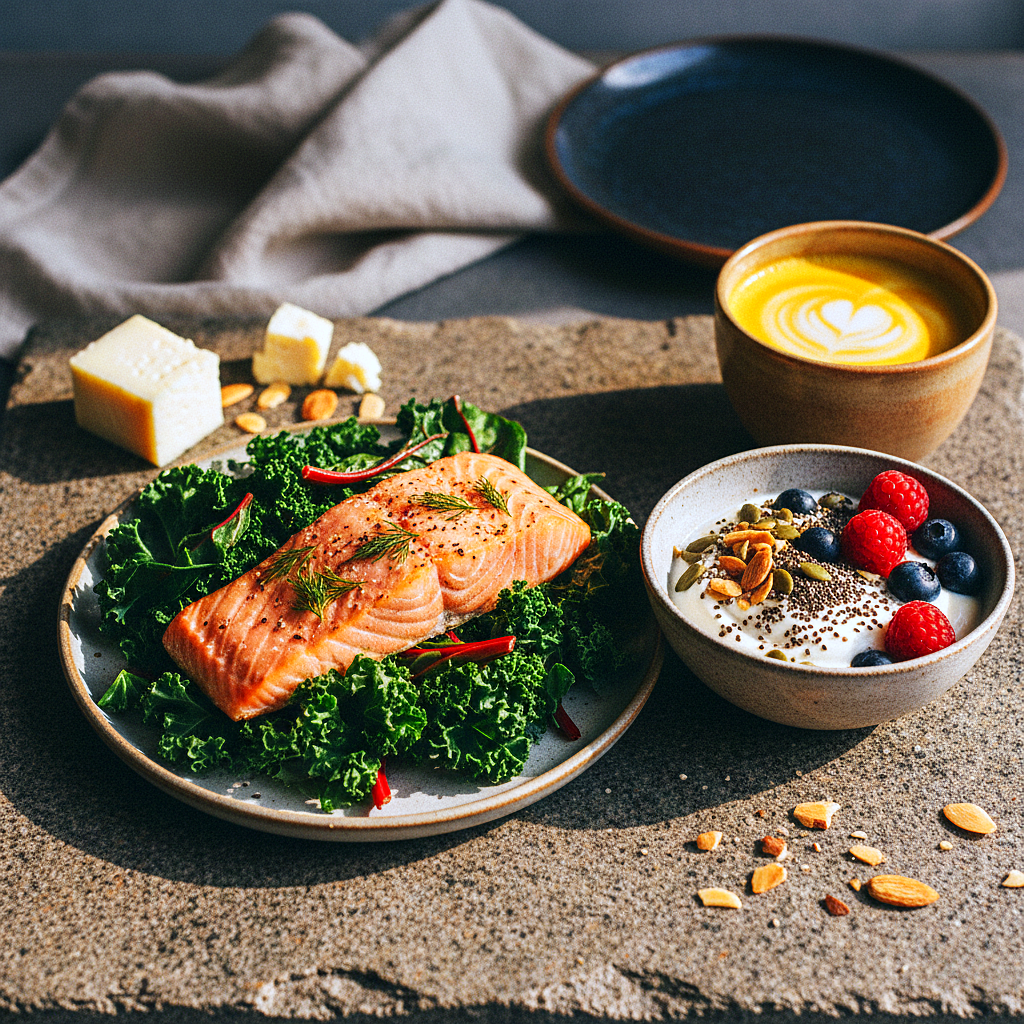
The evidence-based core of perimenopause nutrition is unglamorous and consistent: enough protein, plenty of fiber, calcium and vitamin D mostly from food, an overall whole-foods pattern, regular strength training, and protected sleep. Many supplements marketed to balance hormones or melt belly fat are not well supported, and some carry real risks. The honest answer is that food, movement, and sleep do most of the work, and any supplement decision belongs with you and your doctor, not a sales page.
If you are trying to sort real perimenopause nutrition advice from the noise, here is the honest version: the evidence supports unglamorous basics, and most hormone-balancing supplements do not have the research to back their claims. Enough protein, plenty of fiber, calcium and vitamin D mostly from food, a whole-foods pattern, strength training, and sleep are where the science actually points.
Key takeaways
- The well-supported core of perimenopause nutrition is food-first: protein, fiber, calcium, vitamin D, an overall whole-foods pattern, strength, and sleep.
- Many supplements marketed to balance hormones or target belly fat are not well supported by evidence, and some carry real risks.
- Hype has tells you can learn to read, like cure-all promises, hidden doses, and commission-driven recommendations.
- Your money and energy usually go further on groceries, strength training, and time with a registered dietitian than on a shelf of pills.
- Any supplement decision is an individual one to make with your doctor, not something to settle from a sales page.
Why does perimenopause feel like a supplement free-for-all?
Perimenopause is having a moment, and that is mostly good. Women who were dismissed for years are finally being told their symptoms are real. The shadow side is that attention attracts marketing, and the supplement industry has moved faster than the evidence. Scroll for a few minutes and you will see products promising to balance your hormones, reset your metabolism, and erase symptoms you did not know you were supposed to have.
I want to be the calm voice here. A lot of what you are seeing is sold to you, not studied for you. That does not mean every supplement is useless or that your symptoms are imaginary. It means the gap between what is marketed and what is proven is wide, and you deserve to know which side of that gap any given claim sits on.
What does the evidence actually support?
The well-studied fundamentals are not exciting, which is exactly why they rarely go viral. They work quietly.
Protein matters more in midlife, not less. As estrogen declines, it becomes a little harder to maintain muscle, and muscle is what keeps you strong, steady, and metabolically healthy. Aiming for a satisfying source of protein at each meal, whether that is eggs, fish, chicken, tofu, beans, lentils, or yogurt, supports muscle and helps with the appetite swings many women notice.
Fiber is the other workhorse. Fiber from vegetables, fruit, beans, whole grains, nuts, and seeds supports digestion, helps with cholesterol and blood sugar, and tends to be filling and satisfying. Most of us eat less than we think, so this is often the highest-yield place to add, not subtract.
Bone health deserves real attention now. Bone loss can accelerate around menopause, so calcium and vitamin D become more important. Food sources of calcium include dairy, fortified plant milks, tofu set with calcium, sardines, and leafy greens. Vitamin D is harder to get from food alone, and a blood test can tell you and your doctor whether yours is low. That is one of the few places where a targeted supplement is genuinely common, and it is still a decision to make with your doctor based on your labs.
Finally, the pattern around the food matters as much as any single nutrient. An overall whole-foods pattern, broadly Mediterranean in shape, with plenty of plants, healthy fats, and steady protein, is among the best studied for heart and metabolic health in this stage. Pair that with regular strength training and protected sleep, and you have covered the things research consistently supports.
How do I spot perimenopause supplement hype?
You do not need a science degree to read the tells. A few patterns show up again and again.
Be skeptical of cure-all language. When a single product claims to balance your hormones, melt belly fat, lift your mood, fix your sleep, and smooth your skin, that breadth is a marketing choice, not a reflection of evidence. Real findings are usually narrow and modest.
Watch for hidden doses. Proprietary blends that list a long ingredient deck without telling you how much of each is inside make it impossible to know whether there is a meaningful amount of anything. Transparency is a good sign. Mystery is not.
Notice who profits. Influencer codes, affiliate links, and commissions are not automatically disqualifying, but they do mean the person recommending the product may earn money when you buy. Pair that with manufactured urgency, the limited drop or the expiring discount, and you are looking at a sales funnel, not health guidance.
And remember that supplements are loosely regulated. A product can reach the market without proving it does what the label implies, and quality varies. Some supplements also interact with medications. That is not fear-mongering, it is a reason to bring any product you are considering to your doctor before it joins your routine.
Where should my money and energy go instead?
If you want the highest return on your effort, it rarely lives on a supplement shelf.
Spend on the groceries that make the fundamentals easy. A reliable protein source you actually like, fruit and vegetables you will reach for, beans and whole grains in the pantry, and yogurt or another calcium source in the fridge will do more for how you feel than most products marketed to you.
Invest in strength. Resistance training is one of the most powerful tools you have in midlife for protecting muscle, bone, and metabolic health, and it costs nothing but time to start with body-weight movements at home.
Protect your sleep. Sleep gets genuinely harder for many women in perimenopause, and it influences appetite, mood, and energy. Treating sleep as a priority rather than a luxury is one of the most underrated moves you can make.
And consider spending on guidance instead of guesswork. A registered dietitian can look at your real eating pattern, symptoms, and labs and help you decide where, if anywhere, a supplement earns its place. If body changes are weighing on you, my piece on what to eat when your weight shifts in menopause walks through a steadier approach, and if you are weighing the cost of working with someone, is working with a dietitian worth it lays out what that actually looks like.
So do I ever need a supplement?
Sometimes, yes, and that is not a contradiction. Some women have a documented low vitamin D, follow an eating pattern that makes a specific nutrient hard to get, or have a health history that changes their needs. In those cases a targeted, evidence-informed supplement can be a smart, specific tool.
The difference is the reasoning. A supplement that fills a real, identified gap is very different from a product bought because an ad implied your hormones are out of balance. I am not here to tell you to take or avoid any particular supplement, and I will never recommend a specific product or dose. Those decisions belong to you and your doctor, ideally with a registered dietitian helping you read the whole picture.
A warm invitation
You are allowed to feel good in this stage of life, and you do not have to buy your way there. The basics are not glamorous, but they are real, and they are yours to build on at your own pace, without guilt and without anyone telling you certain foods are off-limits. If you would like a calm, evidence-based partner to help you sort signal from noise, I would love to talk. You can book a free intro call whenever you are ready.
Frequently asked questions
Do I need supplements to get through perimenopause?+
Most women do not need a stack of supplements to feel better in perimenopause, and the evidence for most hormone-balancing products is thin. The fundamentals that are well supported are food-based: enough protein and fiber, calcium and vitamin D, an overall whole-foods pattern, strength training, and sleep. There are specific situations where a targeted supplement makes sense, such as low vitamin D on a blood test, but that is an individual decision to make with your doctor rather than a default purchase.
What are the most evidence-based foods for perimenopause?+
There is no single magic food, but a few patterns hold up well. Adequate protein at each meal supports muscle and helps with appetite, fiber from vegetables, fruit, beans, and whole grains supports digestion and heart health, and calcium and vitamin D from food support bone health as estrogen declines. An overall pattern rich in plants, lean and plant proteins, and healthy fats, similar to a Mediterranean style of eating, is among the best studied. The goal is a sustainable pattern, not a restrictive list.
How do I spot a hyped perimenopause supplement?+
Watch for promises that sound too good, such as balancing your hormones, melting belly fat, or fixing every symptom at once. Other red flags are proprietary blends that hide doses, reliance on testimonials instead of research, manufactured urgency, and influencers who earn a commission on what they recommend. Real evidence is usually modest and specific, not a cure-all. When a product claims to do everything, that is a signal to slow down, not to buy.
Will eating differently help with weight changes in perimenopause?+
Body composition often shifts in perimenopause, and that is a normal part of this stage rather than a personal failure. Supporting muscle with enough protein and regular strength training, eating in a steady and satisfying way, and protecting sleep tend to help more than cutting calories hard or chasing a cleanse. The aim is to feel strong and energized, not to shrink at any cost. If you want a plan tailored to your body and history, that is exactly what a registered dietitian can help build.
Should I see a dietitian or just try supplements first?+
Starting with the fundamentals and a registered dietitian usually gives you more value than trial-and-error with supplements. A dietitian can look at your actual eating pattern, symptoms, labs, and goals, and help you decide where, if anywhere, a supplement is worth it. That keeps you from spending money on products that the evidence does not support. You and your doctor remain the decision-makers on anything you put in your body.
This article is general education, not individualized medical or nutrition advice. For a plan built around your health history, labs, and any medications, work with a registered dietitian and your physician.
Dara Sandler, MA, RD, CDN
Dara Sandler is a Registered Dietitian Nutritionist (MA, RD, CDN) trained at New York University, with 14+ years of experience across private, clinical, and corporate nutrition. She specializes in GLP-1 support, menopause, PCOS, and family nutrition.
Want this tailored to you, not a generic article?
Book a free intro callKeep reading