Family & Busy Life
How to Eat Healthy With a Full-Time Job and Kids
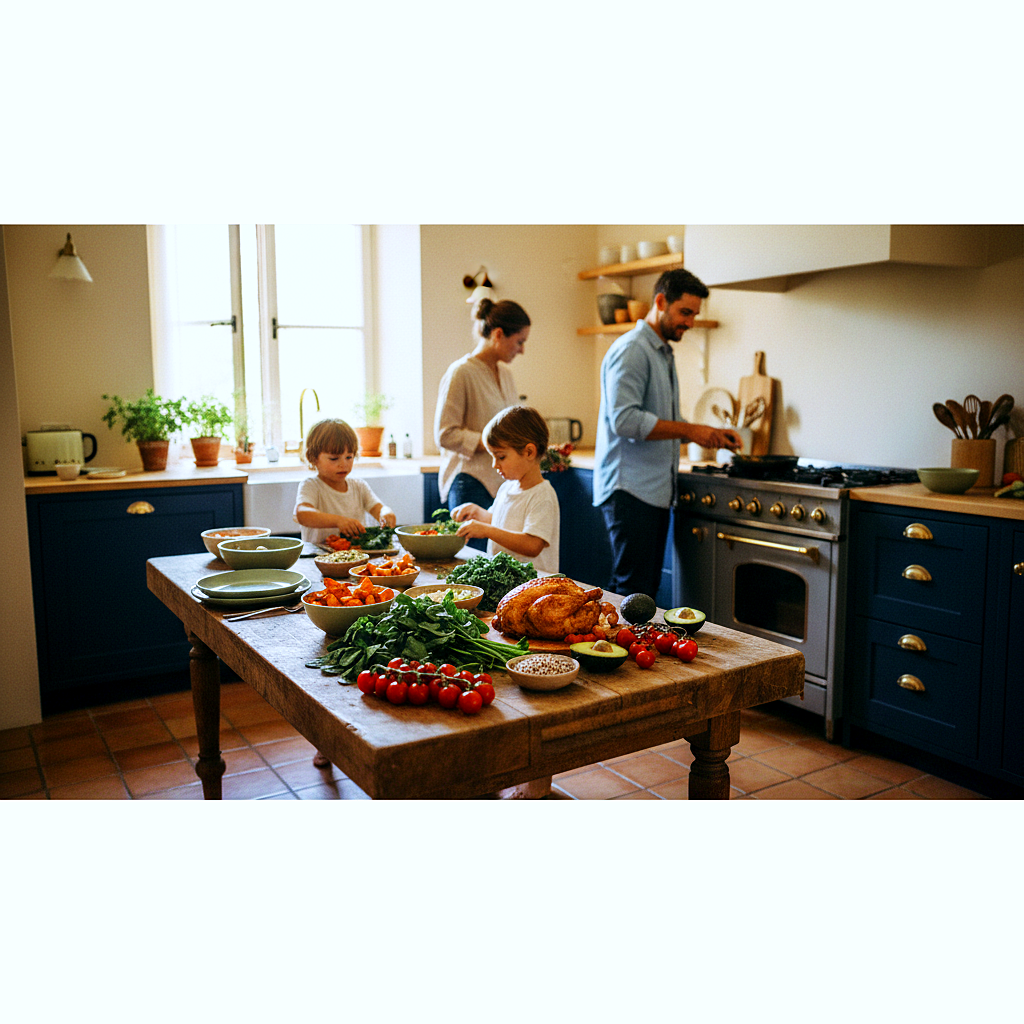
The short answer
You eat healthy with a full-time job and kids by leaning on systems instead of willpower. Build a short rotation of repeatable meals, cook a couple of batch-friendly proteins on a low-effort day, and keep a stocked pantry and freezer so a decent meal is always within reach. The goal is realistic and forgiving, not perfect, so you are adding structure and easy wins rather than adding more rules to an already full day.
If you are wondering how people with full-time jobs and kids eat well at all, the honest answer is that they almost never do it on willpower. They do it on systems: a short rotation of repeatable meals, a couple of batch-friendly proteins, and a stocked pantry that makes a decent meal the easy choice. You are not lacking knowledge or discipline. You are lacking time and bandwidth, and the fix is structure, not trying harder.
Key takeaways
- Healthy eating on a packed schedule runs on systems, not motivation. Remove decisions and friction, and good meals stop depending on how you feel that night.
- A short, repeating rotation of five or six meals beats planning seven new dinners. Repetition is a feature here, not a failure.
- Batch-friendly proteins and a stocked pantry and freezer mean a reasonable meal is always within reach, even on the worst nights.
- Feed the family from one base meal that everyone assembles their own way, so you are not cooking two dinners.
- Aim for realistic and forgiving, not perfect. Convenience foods and a few easy wins count fully, and an off night is not a failure.
Why does eating well feel impossible right now?
Because you are running on a finite amount of daily energy, and by dinnertime most of it is gone. The problem is rarely that you do not know a vegetable is good for you. It is that planning, shopping, deciding, and cooking each ask for attention you have already spent on work and on your kids. When every meal is a fresh decision made on empty, takeout or whatever is fastest wins, and that is not a character flaw. It is math.
I am a mom of two with a full clinical practice, so I am not describing this from the outside. The shift that changes everything is to stop treating each meal as a one-off act of motivation and start treating eating as a system you set up once and then lean on. A system keeps working on the days your willpower does not show up, which, if your life looks anything like mine, is most of them. None of this is individual medical advice. It is general guidance, and if you have specific health needs it is worth building a plan with a registered dietitian who knows your full picture.
What is a meal scaffold?
A meal scaffold is a simple, repeatable formula you fill in rather than a recipe you follow. Instead of asking "what should I make," you ask "what goes in each slot." Most balanced meals come together from the same few parts:
- A protein: chicken, eggs, beans, canned tuna or salmon, tofu, ground turkey, Greek yogurt.
- A carb or starch: rice, pasta, potatoes, whole grain bread, tortillas, quick grains.
- A vegetable or fruit: frozen, fresh, canned, or pre-cut, whatever you have.
- A flavor or finisher: sauce, cheese, olive oil, herbs, salsa, dressing.
That is the whole build-a-plate formula. Pick one from each line and you have a meal, no recipe required. Once this becomes automatic, a tired weeknight stops being a blank page. You are just filling four slots from what is on hand, and the decision shrinks to something you can do on autopilot.
The build-a-plate formula in action
Rotisserie chicken plus microwaved rice plus frozen broccoli plus a drizzle of teriyaki is a complete dinner in ten minutes. Canned beans plus a warm tortilla plus bagged slaw plus salsa is another. Eggs plus toast plus cut fruit is dinner just as easily as breakfast. The components change, the scaffold does not, and that is what makes it repeatable when you are depleted.
How do I plan meals without it becoming a second job?
Stop planning seven different dinners. Build a short rotation instead. Pick five or six meals you already know how to make, that your family will mostly eat, and then repeat them on a loop. Variety is overrated on a weeknight, and nobody is grading you on novelty. Repetition is exactly what makes shopping, prepping, and cooking faster, because your hands already know the moves.
A simple way to hold the rotation is to give weeknights loose themes so you are filling in a template instead of starting cold:
- Monday: grain bowl night (a protein, a grain, a vegetable, a sauce).
- Tuesday: pasta night (pasta, jarred sauce, a protein, frozen vegetables stirred in).
- Wednesday: taco or wrap night (beans or chicken, tortillas, toppings).
- Thursday: sheet pan or one-pan night (a protein and vegetables roasted together).
- Friday: breakfast for dinner or leftovers night.
Write the rotation on the fridge or in your phone so the plan exists outside your tired brain. Keep a running grocery list tied to those same meals, and the weekly shop becomes a quick refill instead of a fresh project. The whole point is to make the decision once, then coast on it for weeks.
What proteins can I batch so the week is easier?
A little cooking on a lower-stress window, often a weekend hour but any pocket of time works, pays off all week. You are not meal-prepping twenty identical containers. You are cooking one or two flexible proteins that slot into the scaffold different ways.
Proteins that batch and reheat well:
- A few pounds of chicken, roasted or poached, then shredded or cubed. It becomes bowls, tacos, wraps, pasta, and salads.
- Ground turkey or beef cooked with simple seasoning, ready for tacos, pasta sauce, or grain bowls.
- A pot of beans or lentils, or simply a few cans rinsed and kept ready.
- Hard-boiled eggs for fast breakfasts, snacks, and quick protein on a plate.
- A batch of grains like rice, quinoa, or farro to pair with any of the above.
Cook the protein and a grain, and half your weeknight assembly is already done. Even one batched protein in the fridge changes how the week feels, because the hardest part of dinner is already behind you. If a weekend window never opens, batching a double portion of a weeknight dinner gets you to the same place.
What should I keep stocked so a meal is always possible?
A stocked kitchen is the quiet system that saves you on the nights everything goes sideways. When the cupboard and freezer can produce a meal on their own, you stop defaulting to takeout because there was "nothing in the house." Keep these on steady rotation:
Pantry: canned beans, canned tuna and salmon, whole grain pasta, rice and quick grains, jarred pasta sauce, canned tomatoes, broth, nut butter, oats, olive oil, and a few go-to seasonings.
Freezer: frozen vegetables, frozen fruit for smoothies, frozen cooked chicken or shrimp, frozen whole grain waffles or bread, and any leftovers you stash in labeled bags.
Fridge: eggs, Greek yogurt, cheese, pre-cut or sturdy vegetables, bagged salad, hummus, and rotisserie chicken when you can grab one.
And please hear this clearly: frozen, canned, and pre-cut foods are not lesser choices. Frozen vegetables are picked and frozen at peak ripeness, canned beans and fish are genuinely nourishing, and bagged salad and pre-cut produce remove the exact friction that makes healthy eating collapse on a Tuesday. Using them is a smart move, not a shortcut you should feel any way about.
Fast assembly meals for the worst nights
For the nights when even the scaffold feels like too much, keep a short list of near-zero-effort meals everyone accepts: pasta with jarred sauce and frozen peas, quesadillas with a side of fruit, a can of soup bulked up with beans and frozen vegetables, yogurt bowls with granola and fruit, or eggs and toast. These are real meals. On a hard night, a fast assembled plate at home is a win, full stop.
How do I feed the kids and myself without making two dinners?
Cook one base meal and let everyone build their own plate from the same parts. Set out the protein, the starch, the vegetable, and a couple of toppings, and let each person assemble what works for them. Your kids might eat the components separate and plain while you combine them into a bowl or a wrap. That is the same dinner with different assembly, not two dinners.
This deconstructed approach takes the pressure off in both directions. You are not short-order cooking, and your kids get some say over their plate, which tends to reduce the nightly standoff. Keep one or two reliable "safe" components in the mix that you know they will eat, so even a picky night still feeds everyone something. You are modeling a calm, no-drama relationship with food, and that steady example matters more than any single dinner going perfectly.
What does forgiving and realistic actually look like?
It looks like a rotation you repeat without apology, convenience foods you use on purpose, and plenty of nights that are simply good enough. Some weeks the system hums. Other weeks it is cereal for dinner twice, and that is genuinely fine. The goal is a baseline you can sustain across real life, not a streak you eventually break.
If a specific health concern is part of your picture, like managing blood sugar or eating to support PCOS and insulin resistance, these same systems still carry you. You adjust what fills the scaffold slots rather than overhauling your whole routine. And if you have wondered whether it is worth bringing in real support, you might find it useful to read whether working with a dietitian is worth it.
A gentle place to start
You do not need to build the whole system this week. Pick one piece. Choose three repeatable dinners, or batch one protein this weekend, or stock the pantry so a meal is always possible. One small system, running quietly in the background, takes more off your plate than a dozen good intentions ever will.
If you want help shaping a rotation and a stocked kitchen around your family, your schedule, and the foods you actually like, I would love to talk it through. You can book a free intro call and we will start exactly where you are, with no judgment and no second job attached.
Frequently asked questions
How do busy working parents actually eat healthy?+
They rely on systems rather than motivation. A short rotation of five or six repeatable meals, one or two batch-cooked proteins, and a stocked pantry mean a reasonable meal is always close at hand. The point is to remove decisions and friction on a tired weeknight, not to cook something impressive. Realistic and forgiving beats perfect every time.
What is the easiest way to plan meals when you have no time?+
Stop planning seven unique dinners and instead pick a small rotation of meals you already know how to make, then repeat them. Assign loose themes to weeknights, like a grain bowl night, a pasta night, and a breakfast-for-dinner night, so you are filling in a template instead of starting from a blank page. Keep the plan on the fridge so no one has to reinvent it each week.
How do I feed my kids and myself without cooking two separate dinners?+
Cook one base meal and let everyone build their own plate from the same components. Put the protein, a starch, a vegetable, and a couple of toppings out, and people assemble what works for them. Kids often eat the deconstructed version while you eat it combined, so it is the same meal with different assembly, not two dinners.
What pantry staples make fast healthy meals possible?+
Stock shelf-stable and freezer basics that turn into a meal fast: canned beans, canned tuna or salmon, whole grain pasta, rice or quick grains, jarred sauce, canned tomatoes, frozen vegetables, frozen and rotisserie chicken, eggs, and Greek yogurt. With those on hand you can assemble a balanced plate in fifteen minutes without a store run. A stocked kitchen is what lets you skip the takeout decision on a hard night.
Is it okay to use frozen, canned, and pre-cut foods?+
Yes, and I encourage it. Frozen vegetables, canned beans and fish, rotisserie chicken, bagged salad, and pre-cut produce are genuinely nutritious and they remove the work that makes healthy eating fall apart on busy days. Using convenience foods is a smart strategy, not a compromise. The most nutritious meal is the one that actually happens.
This article is general education, not individualized medical or nutrition advice. For a plan built around your health history, labs, and any medications, work with a registered dietitian and your physician.
Dara Sandler, MA, RD, CDN
Dara Sandler is a Registered Dietitian Nutritionist (MA, RD, CDN) trained at New York University, with 14+ years of experience across private, clinical, and corporate nutrition. She specializes in GLP-1 support, menopause, PCOS, and family nutrition.
Want this tailored to you, not a generic article?
Book a free intro callKeep reading